
Take them off. Please


Somewhere in Nairobi, a woman sits at a desk with nothing in her pockets. No phone, no bag beneath the chair, nothing she could carry out when the shift ends. On the screen in front of her, a clip runs for less than a minute. She tags it. A credit card on a kitchen bench. She tags that. A child in a bath. A prescription label. A person undressing, filmed from a bedside table by glasses left face-up and still recording. She tags them all and moves on.
There are dozens of people in that room doing the same work. Across the contract, there are 1,108 of her. She wears a lanyard from a company called Sama. Her wage comes from Sama. The footage she watches and tags does not. It comes, in the end, from the stranger who walked past you on the street. Or, if you said nothing, from the friend sitting across the table from you in a cafe.
That is the part of this story that got buried under Kylie Jenner, fashion-week galleries and Super Bowl banana jokes. These are not glasses worn to manage the wearer’s own data. They are glasses that often record everybody else. The people who bought them agreed to something. Everyone in front of them agreed to nothing.
Everyone the wearer walks past, everyone they speak to, stranger or friend, is now part of a pipeline of data that runs from a footpath in Milan or Melbourne, through a data centre in the American Midwest, and into a review queue in East Africa, where a woman with no phone in her pocket watches a stranger’s life go past in under sixty seconds and tags every single thing she sees. Children, dogs, credit cards, prescriptions, car number plates, school uniforms.
The person who bought them agreed to something. Everyone in front of them agreed to nothing. Meta calls this AI-powered. I call it a mass consent-laundering operation.
In February 2026, the Swedish newspapers Svenska Dagbladet and Göteborgs-Posten published a joint investigation into the human infrastructure beneath Meta’s Ray-Ban glasses. What they found was not an edge case. It was a factory floor, where video and audio captured by the glasses were labelled by hand to teach Meta’s AI to interpret real-world scenes. The queue was not sanitised. Workers saw people getting dressed, using the bathroom, carrying credit cards and paperwork into frame. One of them put it in a sentence that ought to be printed on the box. “We see everything, from living rooms to naked bodies.” Meta said it filters the data to protect privacy. The workers said the filter did not always work, and that in the moments a face was meant to be blurred and was not, they saw the whole person.
In April, Meta terminated the contract with Sama. All 1,108 workers were given six days’ notice. The people who saw everything now see the inside of an unemployment queue. The rest of us are still looking at the Kylie Jenner ads. And the extraordinary amount of female influencers now normalising these devices. They themselves influenced by one of the most expensive consumer-marketing efforts of the decade, and nearly every dollar has gone to solving a single problem.
How do you get a public to stop reacting to a camera on a stranger’s face the way it reacted, correctly, to Google Glass a decade ago?
The answer was to spend on faces so beautiful and so beloved that the disgust reflex simply gives up. Chris Hemsworth and Kylie Jenner and Spike Lee at the top, and beneath them a paid army of ordinary creators and influencers filming their commute and their toddler, because once a camera on a face is ordinary it is no longer up for debate.
The estimate of what has been poured into making these feel ordinary runs to hundreds of millions of dollars, and it has worked. Meta sold seven million pairs last year. Its chief executive, Mark Zuckerberg, told an earnings call that “people who do not own smart glasses may one day be at a significant cognitive disadvantage.” The head of the largest social platform on earth is telling the public that anyone who does not strap his camera to their face will be intellectually inferior to the neighbour who did.
The mechanism underneath all of it is fashion. Google Glass failed because it looked like science fiction strapped to a face. Ray-Ban Meta succeeds because it looks like the glasses Tom Cruise wore in Top Gun that made them the optime of cool when I was a teen. They are a century of heritage design wrapped around a decade of engineering, and Meta’s own marketing leadership has said out loud, from a stage in Milan, that selling these as a fashion item rather than a surveillance device is now the industry standard. When Meta launched its own in-house line this year, it proved that point without meaning to. Meta put Kylie Jenner in front of the camera, not an engineer. She co-designed the frames and lent her voice to the AI inside them, and her launch film told you almost nothing about what the glasses actually do. The pitch was never the technology. The pitch was her face, and the quiet argument underneath it was that a camera is easier to accept when someone you already admire is wearing it first. That is what I will now refer to as creepy-tech, normalised. And it worked.
Now walk down a real street with me. Via dei Calzaioli in Florence, past the duomo at a quarter past four, sit in a bar just off a piazza. Somewhere in that crowd is a pair of glasses on a face you have never seen, with a pinhole camera in the corner of the left lens and a small light beside it that is meant to glow when it records. That light can be covered with a piece of tape, and the person in front of the wearer is not looking for it anyway. They are filming you arguing with your spouse and they are filming your children. Because even though they are filming the magnificent duomo, you and your family are in the frame.
Two students at Harvard have already shown that the same glasses, run through publicly available tools, can produce a stranger’s name, address and phone number in about a minute.
So imagine your daughter on tram in Melbourne. She is fifteen, with a group of friends all in school uniform and there is a man with the camera on his face. He could be using the glasses for translation and looks up, looks at your child does not know they are fifteen and films them by default , because he films everything, because filming everything is the whole design. A literal dash cam on his face. There is no filter in Nairobi that unblurs itself only for adults. When that child’s image lands in the queue and a worker tags it minor, female, public transport, school logo, Melbourne, no email is sent to her school or her mother. She is just data now.
So try a small experiment in your head.
A business guest arrives at your restaurant of choice for a meeting. They sit down unfold a tripod, mount a camera on the table and point it at you, and mentions over the second course that the footage is being uploaded to a company you have never met, to train a system you know nothing about.
Nobody would tolerate that for thirty seconds. In business or a social setting amongst friends.You would ask them, politely at first, to put it away, and if they refused you would ask them to leave.
Now picture the same guest arriving in a pair of Meta glasses and doing precisely the same thing, and picture yourself saying nothing at all, because the tripod has been folded down to the size of a temple hinge and painted the colour of Tom Cruise in Top Gun. That is the whole sleight of hand. A shared meal and a conversation, one of the last private spaces we have, quietly reassigned as AI and surveillance training data for a company that was not invited and will not leave and does not have the best history of online safety.
In Europe we already have the law for this, and it is not ambiguous. Under European data protection law, the GDPR, a video that makes a person identifiable is personal data, and recording an identifiable person in a way that leaves your own phone needs their consent. In May 2026, France’s data protection authority described connected glasses as a “significant risk that normalises a surveillance” almost invisible and omnipresent, and carried an action plan to the European Data Protection Board. Two Italian members of the European Parliament wrote to Meta’s lead regulator in Europe asking the plain question of whether any of this is lawful. Meta, given every chance to answer, answered a different question instead. Not the one about the woman in Nairobi, or the stranger in the cafe, or the footage that left the footpath and crossed three continents to reach her screen. Meta said the photos and videos are private to users. It said the footage stays on your device unless you choose to share it. It pointed, when pressed, to its own terms of service, and to the small light on the frame that is supposed to tell the rest of us we are being recorded, the light the pickup artists have already learned to cover with a fingertip. That is a company describing the promise it made to the person who bought the glasses, while the people in front of the glasses, the ones who agreed to nothing, are still waiting to hear their names.
A blinking white light the size of a grain of rice, lit for a fraction of a second, several metres away or just before someone walks into the room, on the frame of a pair of glasses, is not consent. It only looks like consent. It is designed to look like consent, so that a legal team can point to it in a filing while everyone in the room is filmed anyway.
The GDPR already says a person cannot be recorded into a training set unless they agree to it. So the awkwardness has been placed on the wrong person. The one who should feel uncomfortable is not the person asking for the camera to be switched off or the glasses taken off. It should be the person who chose to bring a live camera into a room full of people who never agreed to appear in anything.
Did we not lose enough to phones, to the slow habit of no longer being fully present with one another? A woman who has left a violent partner now has to decide whether she can sit in a café at all, if she must assume every third table is broadcasting her face. A teenage girl has to weigh the walk to the tram against the chance that the man across the aisle is filming her.
Public space stops being public the moment it is silently recorded. It becomes a film set, and a set only ever belonging to the person holding the camera. The end point is not a future where everyone films everyone. It is a sadder, smaller one, where the people most at risk simply stop going out.
We are social animals, and nearly everything that makes us worth knowing happens in the moments we believe are not being recorded. The unguarded laugh. The argument you have and then repair before anyone else hears it. The confession made across a kitchen table at one in the morning. The clumsy first attempt at flirtation. The grief that arrives in public and refuses to wait until you are alone. None of it survives the presence of a camera. The self that knows it might be filmed is not your real self. It is performative, a managed version, edited in real time for an audience it cannot see, and the constant low effort of maintaining that version is the exact opposite of intimacy. We should recognise this, because we have run the experiment once already. The smartphone taught us exactly what happens when a camera is always within reach. We began curating dinners before we ate them and holidays before we felt them, narrating our own lives in the third person, growing quietly more isolated while more constantly in touch than any people in history. The one thing the phone still asked of us was a small visible decision, a hand lifted, a lens raised, a moment when the people around us could see the choice being made and object to it. Meta glasses remove even that. The camera is simply always aimed, at the height of the eyes, wherever the wearer happens to be looking, and the only warning is a light most people will never learn to read. A person who is always slightly performing is never quite present. A society in which everyone is always slightly performing is a lonelier place than the one most of us grew up in, whatever its follower count.
Children feel this first and worst, because becoming a person takes an enormous amount of unobserved rehearsal. Adolescence is a long, awkward, private draft. It is trying on selves that do not fit, saying the wrong thing and learning why it was wrong, being ridiculous in a bedroom with the door shut and no one keeping score. A child who grows up assuming that any moment in public might be captured and tagged and shipped to a stranger never gets that draft. They get a permanent record and a performance, from the age they first walk to school alone. We are asking a generation to write themselves in public, under lights, with no eraser, and then calling their exhaustion a mental-health crisis as though it arrived from nowhere.
The fear of being filmed changes a street long before anyone actually presses record, because it is enough to suspect it. You lower your voice. You let the conversation you were about to have wait for another time. You hesitate before picking up a crying child the way you would have, because a stranger’s lens is pointed somewhere near you and you no longer know who is behind it or where the footage ends up. Multiply that one small hesitation by a whole city and you have a public square that has quietly gone cold. This is what people mean, without quite having the words for it, when they say something feels off now. Public life has always run on a simple assumption, that we are among one another rather than being processed by one another. Take that assumption away and people do not become criminals or activists. They just go home, and stay there, and the piazzas empty one careful person at a time.
I spoke at a school in Australia recently, to a room of three or four hundred parents. A few minutes in, a woman near the front slid a pair of Meta Ray-Bans up her nose, and the small white light came on , fortunately it caught my eye. I stopped mid-sentence and asked her, from the stage, if she would please stop filming me. She did not argue. She took them off, folded them neatly, put them in her pocket, slightly embarrassed and we carried on. The whole exchange took about six seconds. It was not aggressive and it was not rude. It was the same request any of us would make of a guest who arrived with a tripod and started setting up at the dinner table. The device changes. The manners do not. We already know how to do this. We ask people to take off their shoes in a mosque and to silence a phone at a funeral. We can ask them to take a networked camera off their face at a dinner, at a school gate, on a train. You are allowed to say that you are happy for someone to wear glasses and not happy for them to wear a camera. You are allowed to say, warmly and without apology, that the person is welcome and the glasses with a camera is not.
Privacy is a social contract. We have not spent the last hundred years recording one another at the dinner table, and not for lack of technology, since the hidden camera is a nineteenth-century invention. It is that we agreed, quietly and mostly without writing it down, that some parts of a life belong to the person living it. Please consider that with your children. Meta is not offering a product so much as asking us to renegotiate that contract, without a vote, on its terms, with a blinking white light as the only thing offered in return.
What we are really protecting is the ordinary, unrecorded, unremarkable freedom to be among other people without being turned into their content. That freedom is the soil in which friendship and tenderness and honesty and grief have always grown, and it does not grow under a lens. It is worth defending, and it can be defended in a single sentence, said kindly. Take them off. Please.
It is six seconds at the front of a room, or at a front door, or at a school gate, or a table in a restaurant, said the same way you would say it to anyone who walked in, set a camera on a tripod, and pointed it at your family.
Turn them off and put them away. Please.
Know what they look like.
Search “Ray-Ban Meta Wayfarer Gen 2,” “Oakley Meta HSTN,” “Meta Starfire Kylie Edition,” and “Ray-Ban Meta Display.” Show your kids the tiny lens in the top corner of the frame and the LED beside it. The girls who can spot them can protect themselves. The girls who can’t are training data.
Teach the discomfort rule.
If something feels off — leave. She does not owe anyone her presence on a tram, in a café, at a family gathering, or on a school excursion.
Ask your school and childcare centre for their smart-glasses policy in writing.
Early learning centres are already required to ban personal image-capturing devices without parental consent. Most schools Safe on Social works with have already asked for our assistance to update policy through our Ctrl+Shft platform If your school doesn’t have a policy, ask why.
Report image-based abuse.
In Australia, report to. Anywhere else, contact your national data protection authority.
Write to your federal MP and Senator.
The federal privacy framework has not kept up with wearable AI.
Know your state law. NSW, SA, WA, Tasmania, and the ACT are all-party consent states. Recording a private conversation without every participant’s agreement is a criminal offence with penalties up to $75,000 or three years’ prison in South Australia and $11,000 or five years in New South Wales. If you catch a stranger recording you or your child in a private setting, that is a crime. Report it.
Refuse the room.
If a wedding guest, a colleague, a house-guest, or a stranger on the bus is wearing them — say so. Kindly and out loud. Politely and firmly. “Please turn those off.” Social pressure is the only lever that scales faster than Meta’s marketing budget.
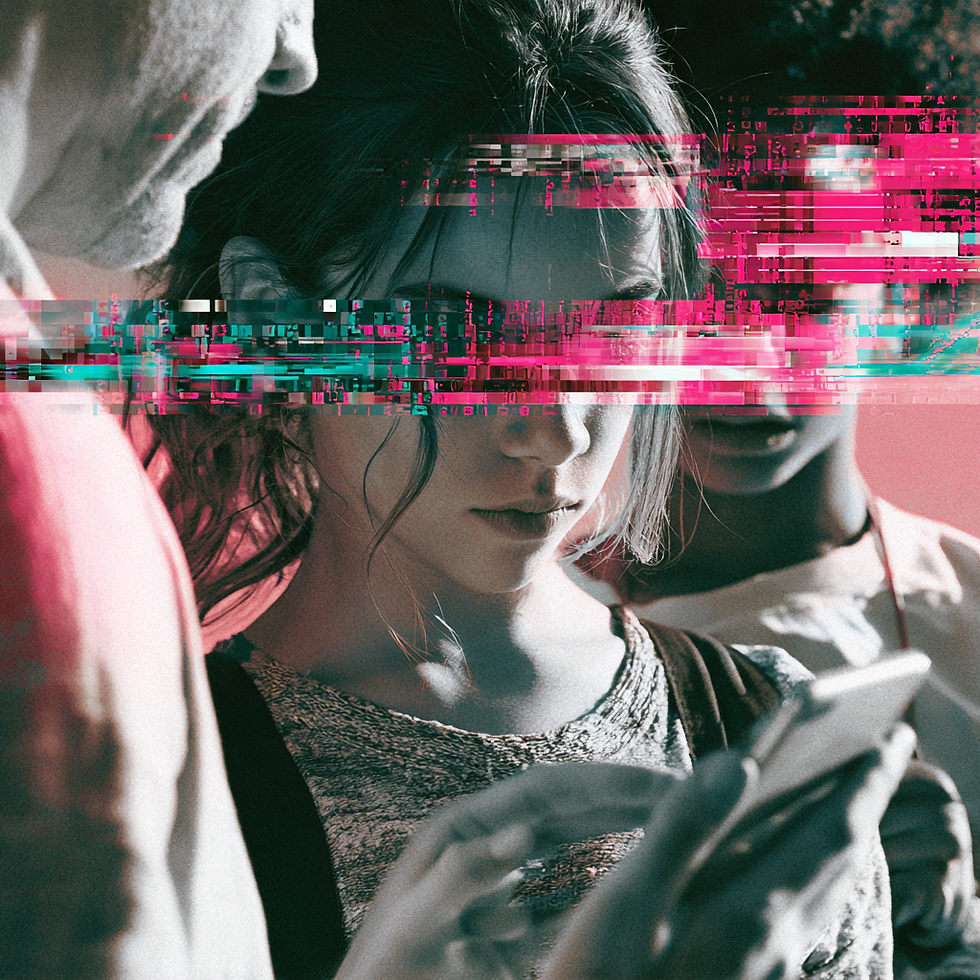
Image - Instagram @kyliejenner


Comments