
The Only Job Where You Have to Face Them Again

Teaching is the only profession that requires you to front up in front of your abuser the very next morning, mark their work fairly, and keep them safe.

If you know, you know.
It is the morning after. You are in the driver's seat with the keys in your hand, and you have not started the car. You are not crying, not yet. You are running the words back, the ones a fifteen-year-old said in front of twenty-eight other children, and then the rest of it, the post that went up afterwards with a photograph of you pulled straight off the school system and altered and shared further than you will ever know. And you are working out how you are going to walk into that same room today, at the same time, and teach that same child. Because you will. That is the part almost nobody outside education understands. Because no other profession is asked to do this.
In almost every workplace, when a person abuses you, the system is built to put distance between you and them. Someone is removed, barred, discharged, escorted out. The design principle is separation.
Teaching inverts it. A teacher is abused on Thursday and is expected to front up on Friday, mark that student fairly, greet them at the door, keep them safe and keep teaching them well. To hold no grudge. To show no wobble. To model, at close range and on demand, exactly the regulation the child did not show them. Five days a week, for as long as that student is enrolled.
That is not a small ask. It is one of the most emotionally demanding requirements of any job, and we have never really named it. We suspend the student for a few days, reopen the gate, and move on.
What has changed is the abuse no longer ends when the bell goes.
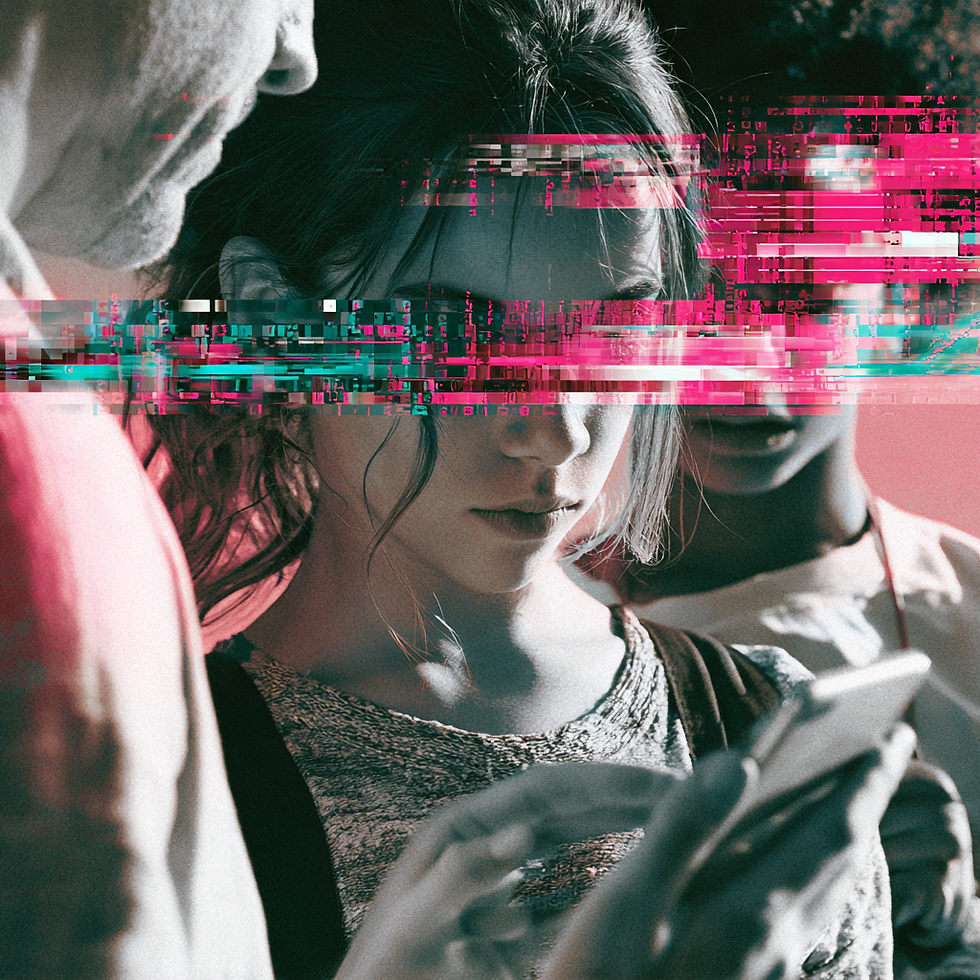
It gets captured, cut, captioned and posted. A pair of smart glasses sits on a face and there is no way to know from three metres away whether they are on or off. A moment that would once have lived and died inside one classroom now has a second life in a student group chat, a third on a public Instagram account with your name in the caption, a fourth as a TikTok with a laugh track over the top. Then the screenshot, which is the part that never really goes away, because a screenshot has no expiry date and it tends to resurface on precisely the day you had forgotten about it. And sometimes, hardest of all, there is the version that quietly circulates among your own colleagues. Teachers are angry about this, and they are right to be.
A student can record on a phone or a pair of glasses in a second. They often have access to staff photographs sitting inside school systems, available at any hour, one screenshot away. The teacher, in that same second, is bound by a far heavier set of duties.
There is no single Australian law on recording. It differs by state and territory. It turns heavily on whether audio was captured, and on whether a conversation was legally private rather than simply not public. Almost everywhere, sharing or publishing a recording is treated more seriously than making it, which matters enormously, because sharing is usually the entire point.
If a teacher films or photographs a student, or takes a student image off a school system, they are not acting as a private individual having a hard day. They are acting for a school and an employer, and a recording of an identifiable child is personal information. It must be collected for a lawful and proportionate reason, stored properly, access controlled and disclosed carefully. You cannot even the score with your own phone, and you certainly cannot do it with a personal pair of glasses that quietly sends footage of other people's children to a cloud service.
So to the question I am asked in staff rooms almost every week now, which is, why can they do it to me and I cannot do it back, the honest answer is that the rules are not lighter on students. They are heavier on you. You are the professional, and you carry the school with you wherever you go. That is a defensible position in law. It is a brutal one to sit inside at seven in the morning with the keys in your hand.
Two stories I cannot stop thinking about are:
A teacher took her own children to the local shopping centre on a weekend. A group of students from her school appeared in front of her. One walked ahead of them, lifted his phone in that familiar selfie angle, hit record, and filmed her with her kids on a Sunday afternoon. I am told this is common now. And then nothing happened because it was a Sunday, it was not on school grounds, and, on its own, it did not obviously meet a criminal threshold. If it had ever reached a platform report, it would likely have been found not to breach any guideline. The advice she received was a version of try not to let it get to you.
The second is a primary school teacher. A student built a fake TikTok account in his name, using a photograph of him, his wife and their three children. The account was reported to the police, who could not attribute it to anyone in particular, though another student told him exactly who was responsible. The school offered very little, because the concern raised with him was that the child's parents would sue. What kept him awake was not the humiliation. It was the arithmetic. Teachers work under constant scrutiny, and if he is ever accused of anything at all, he has no idea what that fake account has been liking, who it has been messaging, what it has been commenting on, or how any of it could be produced against him later. His family's privacy now lies in the hands of a thirteen-year-old, and there is no process anywhere that returns it to him.
In both stories, the worst part is the nothing.
The nothing teaches a child that a teacher is fair game anywhere, at any hour, including when their own children are sitting beside them. The nothing means that on Monday morning they walk back into a classroom and teach the student who had filmed their family and done who knows what with the footage, and they smiled, and they did their job, and they told nobody what it was really costing them psychologically.
Everything described above is foreseeable. Not unpredictable, not freakish, not the one bad apple nobody could have anticipated. Wearable cameras, fake accounts, altered images and off-site filming are now ordinary features of school life, which means the psychological harm they cause staff is a foreseeable psychosocial risk under WHS, and foreseeable risks attract a duty to take reasonable steps.
I say this in almost every school we assist with online crisis management plans and review before accreditation cycles. It is not a failing of anybody working in a school today. Policies age at the speed of what feels like the speed of light, and now move faster than any drafting cycle can follow. A policy written in 2024 for laptops and phones was created by people doing their best with what existed at the time. It simply cannot reach a camera worn on a face, for example. If a policy cannot be applied to a device from the moment that device walks through the gate, whether or not anyone can see it, then it is not yet a policy. An overhaul means saying things plainly, in a student policy that parents co-sign, that filming staff without consent is a serious matter whether it happens in a classroom, a corridor, a car park, a shopping centre or a cinema, and that off-site does not mean out of scope when a person is targeted because of their role at the school. It means a protocol simple enough for a casual teacher to follow on day one. Preserve the links, screenshots, witness accounts, and relevant school records quickly, before an account disappears. It means an authorised way for staff to have serious incidents objectively documented by leadership, so that no teacher is ever left choosing between having no evidence at all and taking a personal legal risk to obtain some. A named person in the executive owns the first twenty four hours, so that the teacher is not the one lodging platform reports at eleven at night while their own children sleep down the hall. And it means explicit protection against what comes afterwards.
Parents, this one is yours. This is the conversation to have at the dinner table tonight, and it is not really a lecture about rules. It is a question.
How would you feel if somebody filmed you at the movies with your family and put it online for strangers to laugh at?
Most children, asked plainly, know the answer immediately. They have simply never been asked, because we spend so much energy telling them what not to post and almost none helping them imagine the impact on the person standing on the other side of the lens.
For anyone outside a school who wonders why teachers are resigning in the numbers they are, it is rarely the marking. It is the accumulation of moments that everybody agrees were unacceptable and nobody was able to do anything about, carried privately by a person who has to smile at the source of them again in fourteen hours.
I have sat in many staff rooms, and the pattern almost never varies. The staff know exactly what is happening. The policy is three devices out of date. And so everyone waits for an incident serious enough to force the issue, which is a terrible way to protect people. You do not have to wait for that incident. We ask teachers to be a steady adult in a young person's life. The very least we owe them is the certainty that when a young person treats them badly, something actually happens.
_________________
The obstacles school leaders navigate now evolve faster than any single person can keep up with, and no principal should be expected to shoulder them alone. If you have read this and thought, our policies would fall over in about four seconds, that is precisely why we created Ctrl+Shft.
Ctrl+Shft is purpose built to support schools through exactly this: Behavioural Risk Intelligence, Incident Management, Online Impact Economics and Community Connect. We are the lens behind the mirror, the Predictability Index every school needs to demonstrate reasonable steps before harm rather than after it.
Please feel free to get in touch to learn how we help you get ahead: kirra@safeonsocial.com
This is general commentary, not legal advice about any particular incident.




소액결제
The information here is presented very clearly. It was an enjoyable and informative read.
For users working with a Tenda router, information about 192.168.0.1 Tenda login can be useful when trying to reach the administration settings.
This article powerfully articulates the 'nothing' that follows severe online abuse against teachers, forcing them to endure immense psychological cost while maintaining professionalism. It's shocking how the line between school and personal life has evaporated for educators, even when they're simply with their own children or trying to enjoy sz games in their personal time. The call for parents to engage in this crucial dinner table conversation is spot on – imagining the impact on the other person is key.